

Sri Lanka is one of the world’s best places to go on a safari outside of Africa! There are over 20 national parks in Sri Lanka, and we’ve been lucky enough to visit several of them. We even ticked off each of the ‘Sri Lanka Big Four’: elephants, leopards, sloth bears, and blue whales. Because there are many incredible safari options to choose from, we’ve broken each park down by season, wildlife, and price.
Best National Parks
We’ve visited over seven national parks in Sri Lanka, and below are those we recommend most. Please note that the good season and animals per park differ.
1. Yala National Park
Yala is the most popular national park in Sri Lanka, renowned for leopards. And luck was on our side! In a quiet moment, our guide pointed out one hiding in the tree.
- Location: Southeast coast of Sri Lanka. We visited from nearby Arugam Bay.
- Season: February to September (dry season). We visited in March, which is typically the best time to see leopards. *Note: The park closes in September.
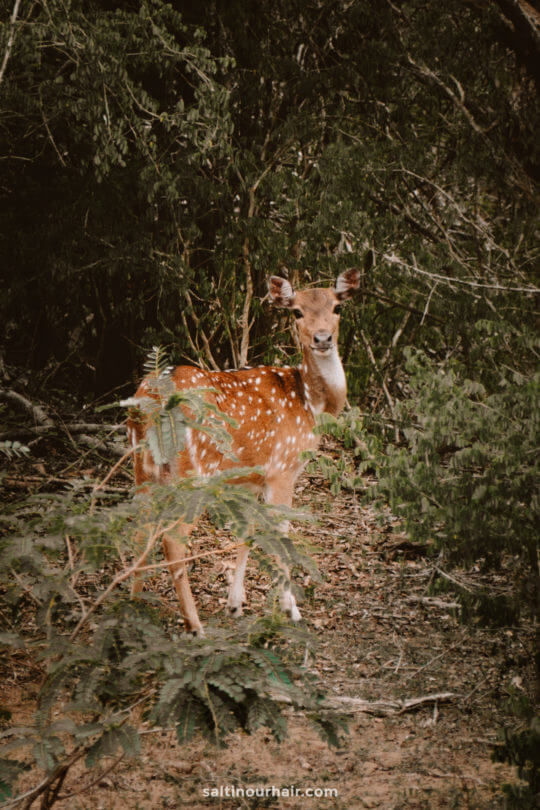
- Animals: Best for leopards (40-50 inside). There are also elephants and the unique sloth bear.
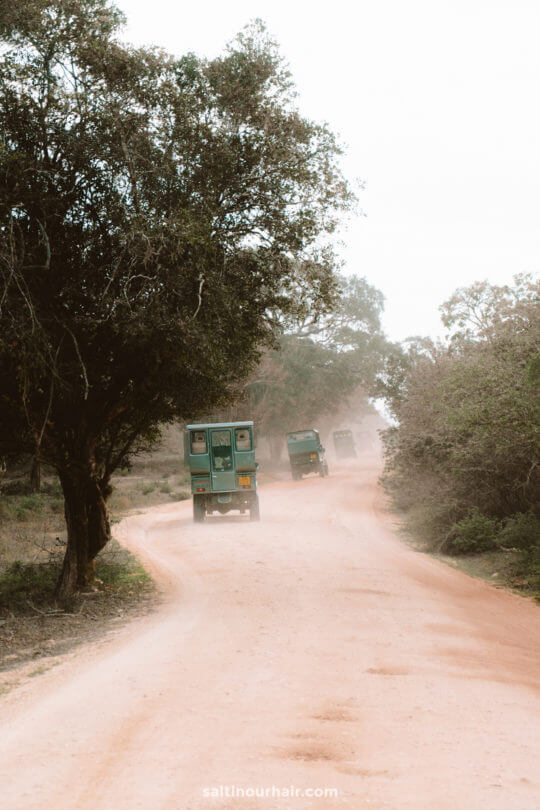
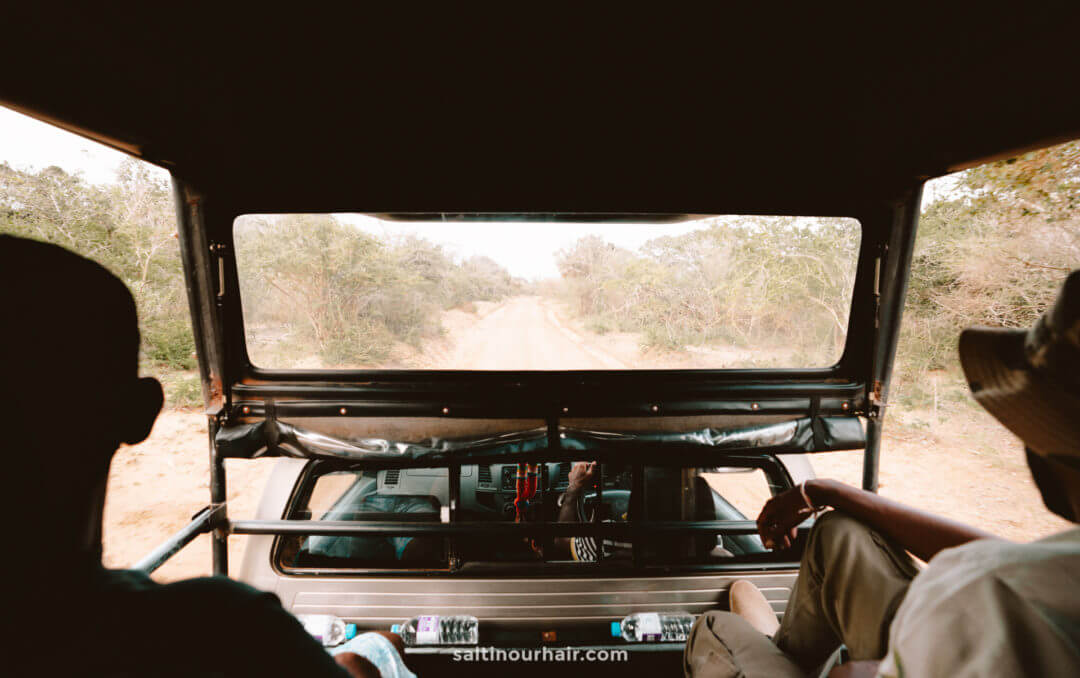
- Price: We paid USD 65 per person for a tour (including park entry, a shared jeep, and a guide) for a 5-hour tour. It ended up being almost 6 hours! Private tours cost over 100 USD, which may be worth it if you want the best chance of seeing leopards. Book your tour to Yala in advance here.
- Crowds: More crowded than most. The park is working to preserve its natural environment and wildlife, so only a few areas are open to the public.
- Where to stay: We stayed in a jungle chalet at Cinnamon Wild, which was a uniquely immersive nature experience. Under the evening stars, we dined in the back of a jeep, watching crocodiles in the water next to us. For our second visit to Yala, we stayed at Wild Coast Lodge.

2. Udawalawe
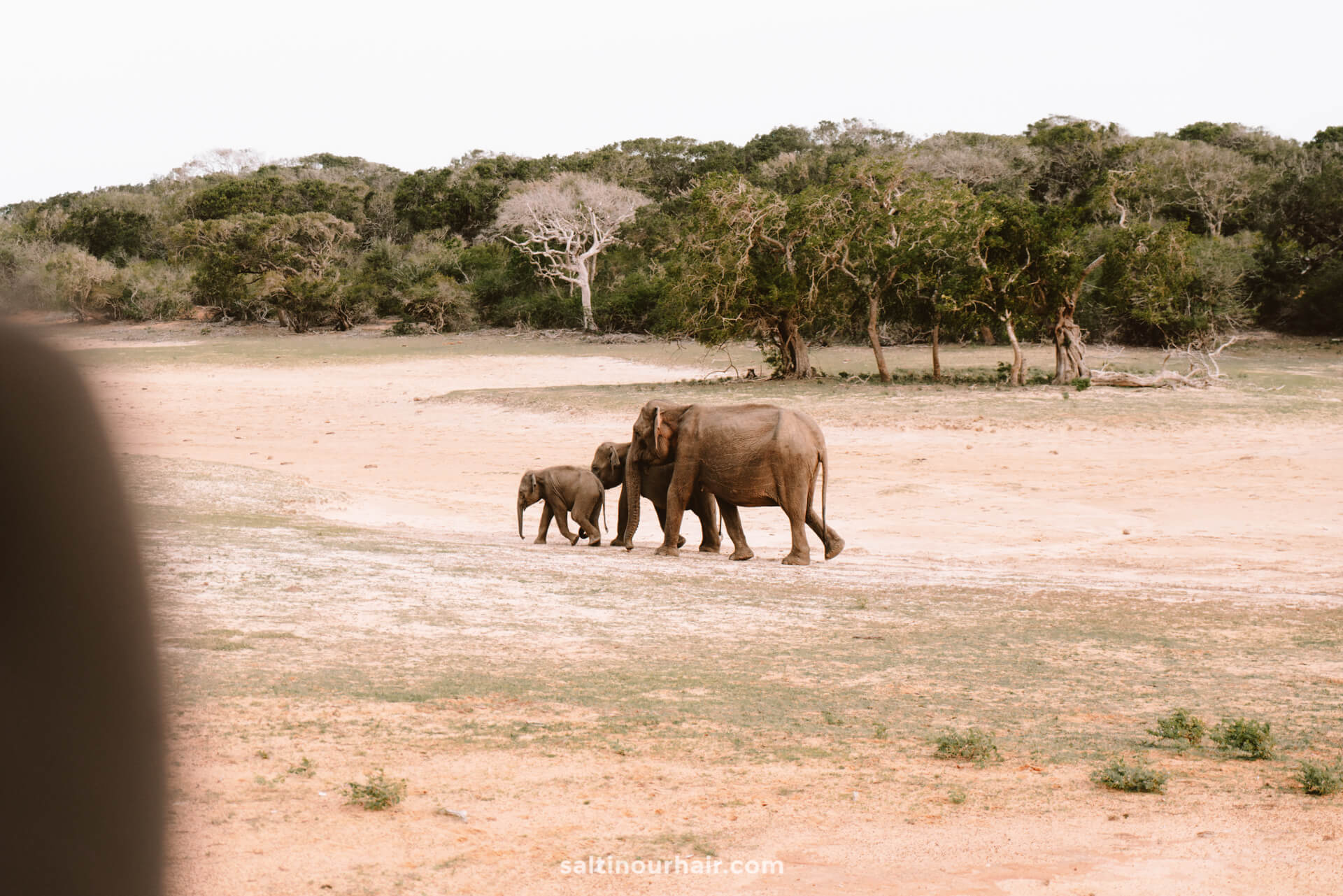
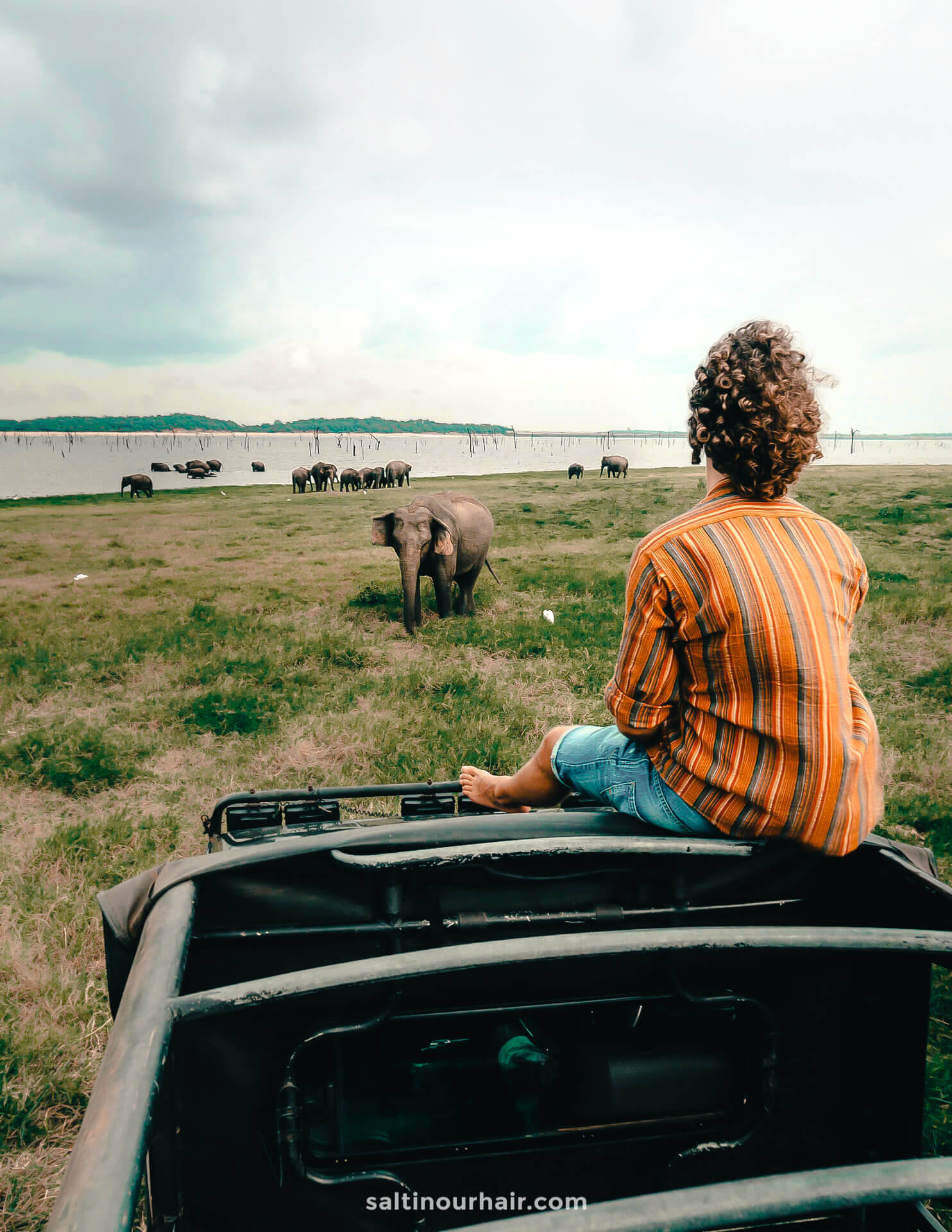
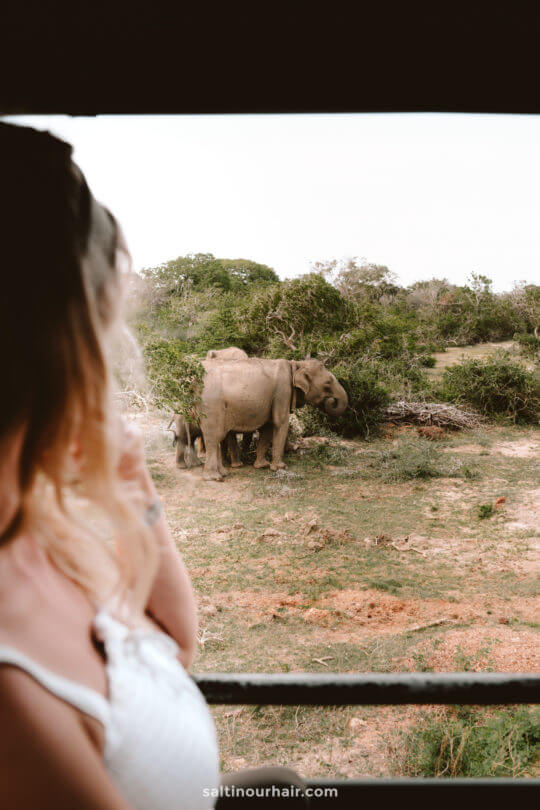
Udawalawe is Yala’s lesser-known neighbor, and one of our favorite spots in Sri Lanka. We had many personal encounters with elephants here because they’re particularly confident and approach vehicles very closely. Also, Udawalawe is primarily open grassland (there aren’t many trees or bushes), making it easier to spot wildlife.
- Location: Inland to the west of Yala, surrounding the Udawalawe reservoir.
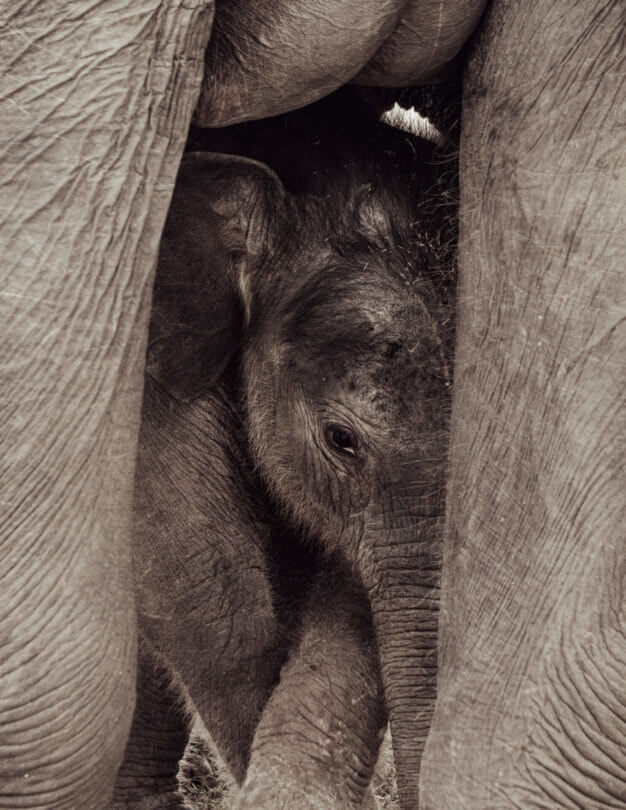
- Season: The dry season is Feb to October. However, the rainy season is the best time to see baby elephants.
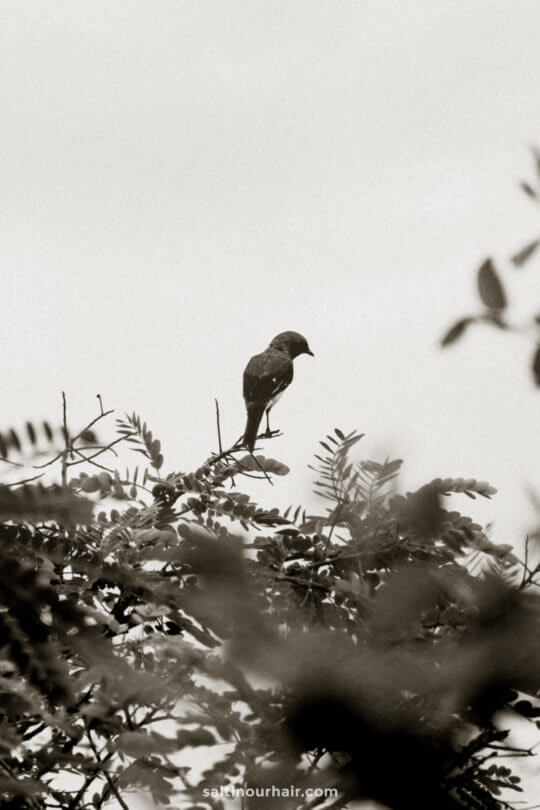
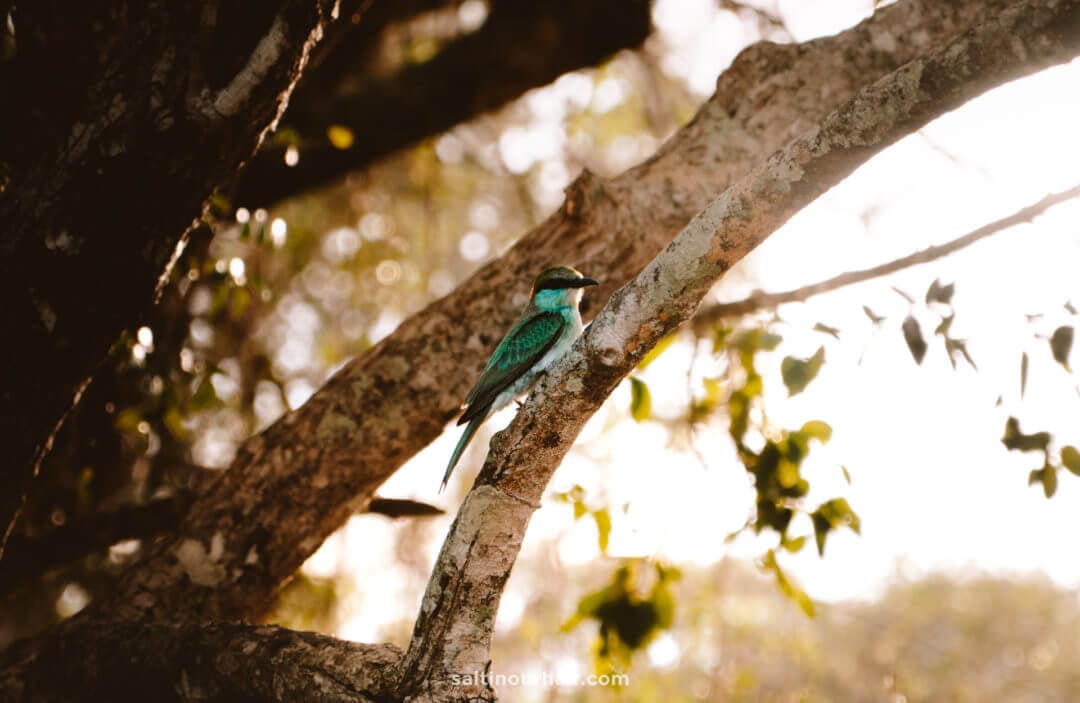
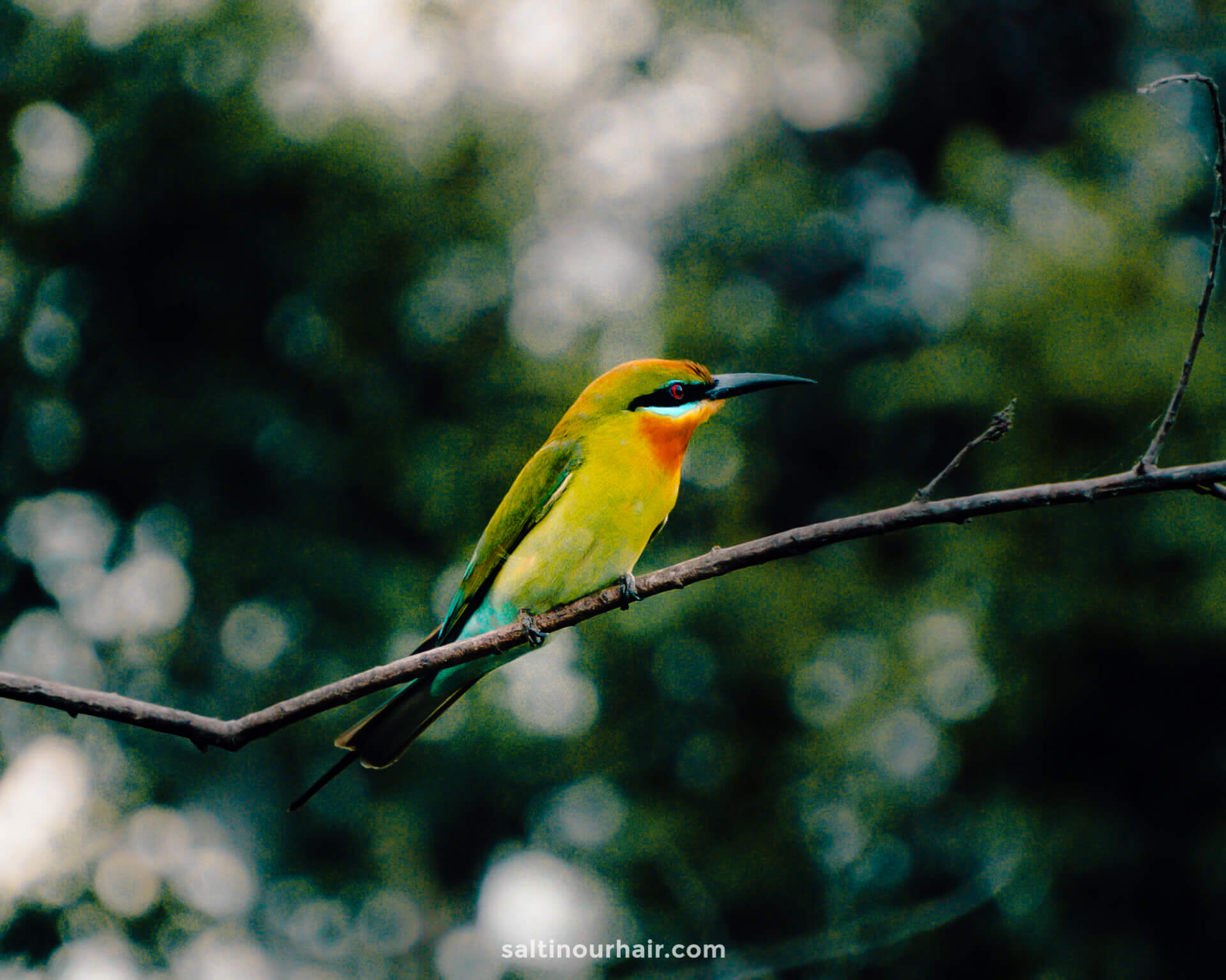
- Animals: Best for elephants (around 500 in the park). Known as the top place for bird watching in Sri Lanka. We saw crocs, water buffalo, and lot of birds, but it is one of the harder places to see leopards.
- Price: We paid 35 USD per person for a shared jeep, but private tours cost around 75 USD. Book your private tour to Udawalawe here.
- Crowds: It’s smaller than Yala but less well known, so we found it calmer.
- Where to stay: We stayed in Dikwella, a coastal town about a 1.5-hour drive. It is a great area, but for the sunrise tour it’s best to stay in Udawalawe itself.
3. Minneriya
Minneriya is most famous for the spectacular ‘elephant gathering’ that takes place in August/September. When the lake dries out, hundreds of elephants gather at the lake to drink and feed on the grassland. Our timing wasn’t quite right to see this, but we’ve heard it’s spectacular!
- Location: North/Central Sri Lanka. We visited from Sigiriya (30-minute drive)
- Season: July to October (dry season). August/September to see the great elephant gathering.
- Animals: Best for elephants. We also observed two distinct monkey species: the Purple-faced Langur and the Toque Macaque. Note: You are unlikely to encounter the diverse wildlife found in other national parks in Sri Lanka.
- Price: We paid approximately USD 60 for a private tour, including pickup, drop-off, and the entrance fee. See availability for a jeep safari here. This was by far the cheapest, but we’d seen the least amount of animals here.
- Crowds: Can be busy during high season, as it’s close to Sigiriya.
- Where to stay: We stayed at Sigiriya Hotel, which had the best views! Browse all hotels in the area.
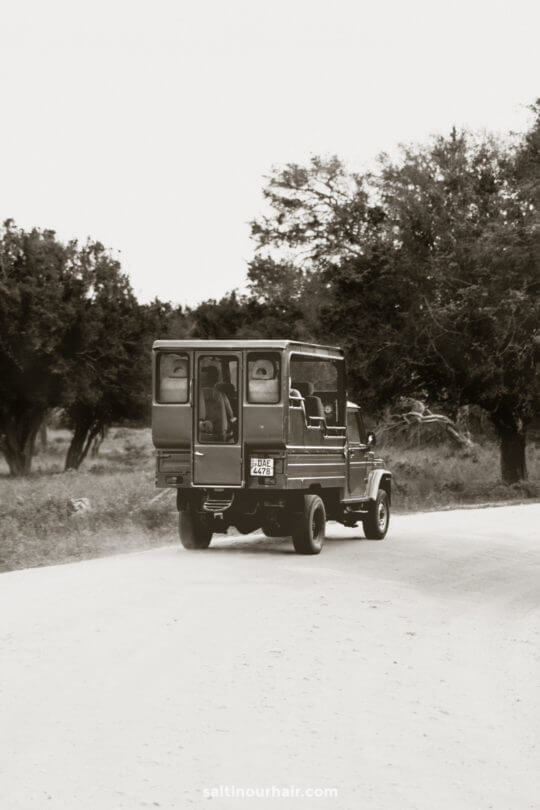
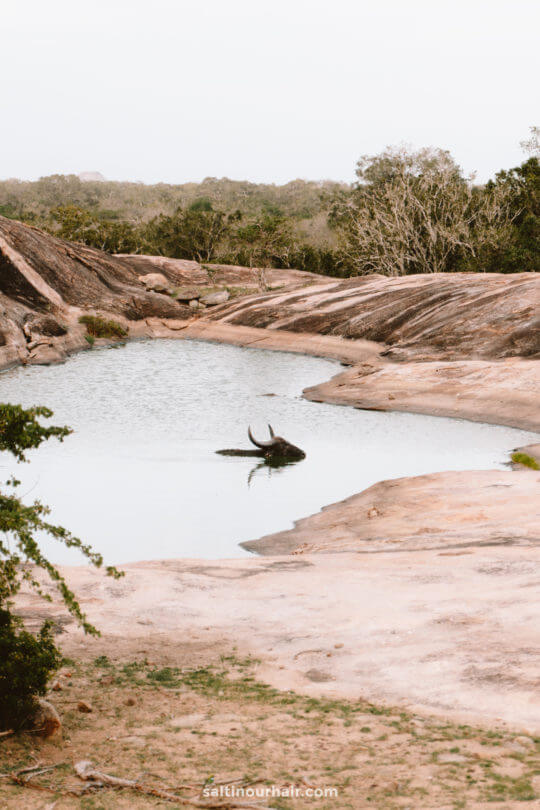
4. Kaudulla
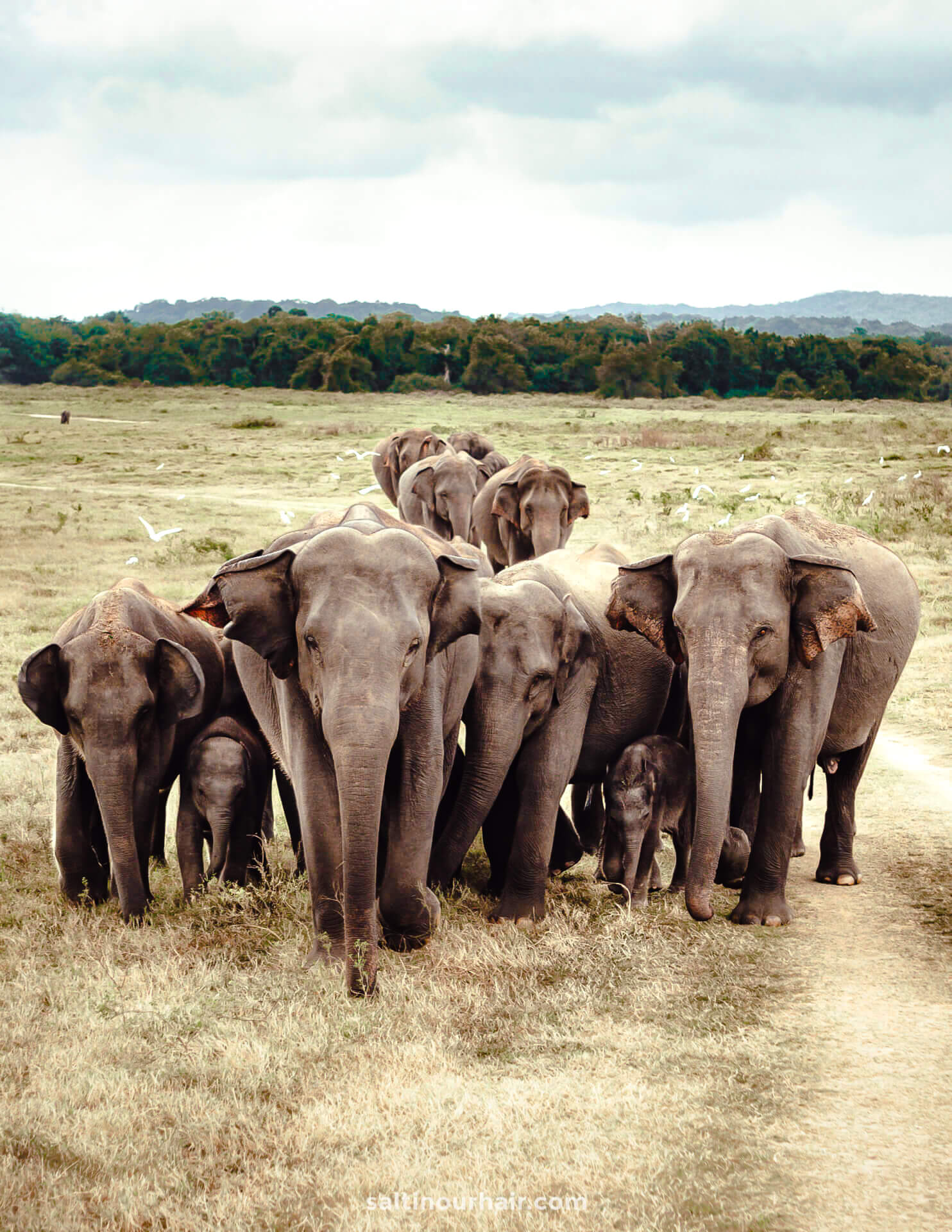
Kaudulla is right next door to Minneriya and has just as amazing wildlife, but we found it much quieter (not too many jeeps around). Elephants move between the two parks, so we saw some large herds on our visit.
- Location: It took us 50 minutes from Sigiriya, but you can also visit from Dambulla in 1 hour.
- Season: July to October. The elephant gathering takes place in August/September.
- Animals: Best for the elephant gathering. Unfortunately, we didn’t see a huge variety of other animals, although we heard it’s possible to see bears, crocodiles, and, in rare cases, leopards.
- Price: We paid approximately USD 60 per person for a private safari. See tickets and availability here for a Kaudulla safari.
- Crowds: Really peaceful; it’s not as well known as other national parks, so there are fewer jeeps.
- Where to stay: We stayed at Sigiriya Hotel, but there are also some great accommodations in Dambulla.
5. Wilpattu (Our Winner)
Wilpattu is our preferred national park in Sri Lanka. It’s a total hidden gem! Although relatively unknown, the park teems with wildlife, with leopard sightings a close second to Yala. We even spotted the reclusive sloth bear.
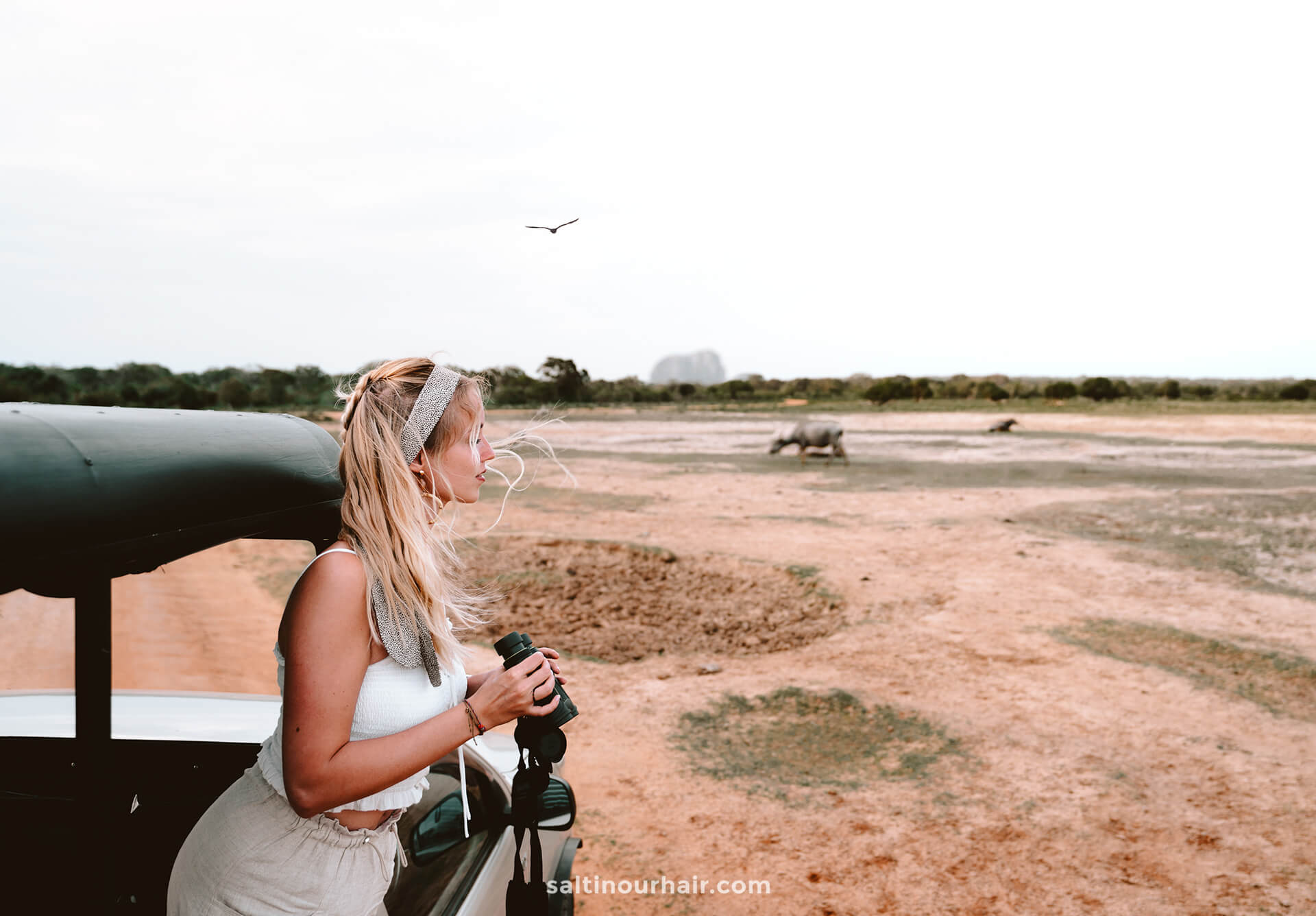
Note: Wilpattu also has the best infrastructure; we definitely had our most comfortable jeep ride here.
- Location: Northwest Sri Lanka (we drove around 50 minutes from Anuradhapura)
- Season: Feb to October (dry season). We visited in the summer, when the sloth bears come out to find fruit on the trees.
- Animals: Best for sightings of the sloth bear, but you also have a good chance of seeing leopards. We didn’t see as many elephants here as in other places.
- Price: We paid 40 USD per person for a half-day tour; a full-day tour costs 80-100 USD. See tickets and availability for a private tour of Wilpattu.
- Crowds: Very peaceful! It’s Sri Lanka’s largest national park; the larger area meant we didn’t see many other jeeps.
- Where to stay: We spend two nights at the great(!) Lolu Village in Anuradhapura.
Best Time to go on Safari
We recommend visiting your chosen national park during the dry season. If you visit in the rainy season, animals take shelter and are harder to spot. There are two monsoon seasons to avoid in Sri Lanka:
- Northeast: October to January
- Southwest: May to July
We purchased an electronic visa (ETA) online before traveling, which was straightforward, and saved us stress on arrival. Here’s how to get a visa for Sri Lanka
Morning or Afternoon Safari?
We did all of our safaris either in the morning or early evening. This meant the animals were out exploring in the cooler temperatures of the day, and we got to see beautiful sunrises and sunsets over the magical landscapes.
Tip: We asked other guests in our hotel to join us on safari. This meant we could split the cost of the jeep hire, and make new friends along the way.
What we packed for our Safari
Even though we were in a jeep, these were our essentials for staying comfortable.
- Non-bright, loose-fitting clothing that is comfortable. We recommend bringing layers in case the weather changes.
- Comfortable shoes. Best to wear shoes you don’t mind getting dirty; on a few occasions, we got out of the jeep to explore.
- A hat or cap to protect us from the sun.
- A non-toxic bug spray.
- Sunscreen. Ours is an environmentally-friendly, reef-safe option.
- Binoculars. We saw some animals up really close, and others much further away. Some tours provide binoculars, but best to check first.
- Camera + zoom lens. We use the Sony 70-200mm GM2 f2.8 lens for our detailed shots, perfect for capturing wildlife.
By purchasing through our links, you support us at no additional cost.
Thank you for your support. ♥️
- Find Hotels via Booking.com
- Find a Rental Car via Sunny Cars
- Find Flights to Sri Lanka via Skyscanner
- Get a Travel Insurance via Heymondo
- Book Tours & Attractions via GetYourGuide
- Book a Bus/Train/Transfer via 12Go



Looking for more travel information? Plan a chat with us for personalised travel advice or get an answer from the Salt in our Hair Travel Community on Facebook.