


Best places to visit in Cook Islands

Weather in Cook Islands
The Cook Islands has a tropical climate with warm temperatures year-round, averaging around 26°C. The dry season (April–November) is the sweet spot for island life, while the wet season brings lush green landscapes and fewer crowds.
- Find Hotels via Booking.com
- Find Hostels via Hostelworld
- Find a Rental Car via Sunny Cars
- Find Flights to Cook Islands via Skyscanner
- Get a Travel Insurance via Heymondo
- Book Tours & Attractions via Viator
- Book a Bus/Train/Transfer via 12Go
- Get a Visa via iVisa
- How to pack light for your trip
- How to plan your trip our tips
The Cook Islands are a group of 15 islands scattered across the South Pacific, sitting roughly between New Zealand and Hawaii (and just east of Fiji and Tonga). The main island, Rarotonga, is where you’ll fly into, while the capital, Avarua, sits on its north coast. The country is self-governing in free association with New Zealand, so it feels remote yet easy to reach.
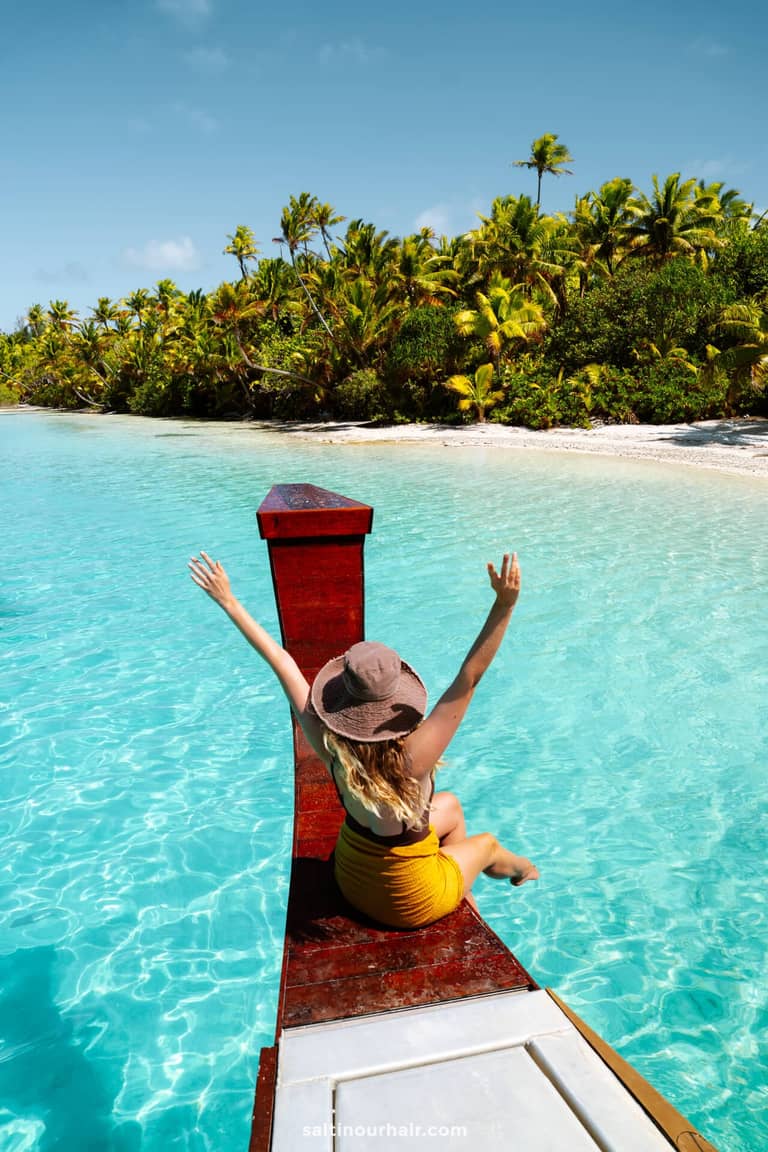
Absolutely! Think turquoise lagoons, palm-fringed white-sand beaches, and a slow, genuinely warm island culture that hasn’t been overrun by mass tourism. Whether you’re cruising the lagoon at Aitutaki or hiking the jungle interior of Rarotonga, it’s the kind of place that delivers the postcard and the soul.
The official currency is the New Zealand Dollar (NZD), so if you’ve traveled in New Zealand like we did, you’re already set. The Cook Islands also make their own coins and notes, including the famous triangular $2 coin and the collectible $3 note, which make fun souvenirs. Bring some cash, as smaller islands and local markets don’t always take cards.
Most travelers do not need a visa for stays of up to 31 days. You’ll simply need a passport valid for your stay, proof of onward travel, and pre-booked accommodation.
On Rarotonga and Aitutaki, tap water isn’t always treated, so it’s best to stick to bottled water. Many resorts also provide drinking water, so do bring your refillable bottle.
Both Cook Islands Māori (Te Reo Māori Kūki ‘Āirani) and English are official languages, and English is widely spoken everywhere. Learning a few local words goes a long way; a warm “Kia Orana” (hello) will always be met with a smile.
The Cook Islands use Type I plugs (the same angled three-pin sockets as New Zealand and Australia), running on 240V. If you’re traveling from elsewhere, pack a universal adapter.
The Cook Islands are one of the safest destinations in the Pacific, with very little crime and a famously friendly, laid-back atmosphere.