

We did a batik workshop while staying in our friend Yande’s village, a peaceful corner of Bali with barely any tourists. Near his home lives a respected local art master who teaches Balinese batik, a traditional technique using hot wax and dye to create intricate patterns. While there are many batik painting workshops in Bali, this one takes place at the artist’s home, offering a glimpse into village life. It ended up being one of our favorite slow mornings on the island.
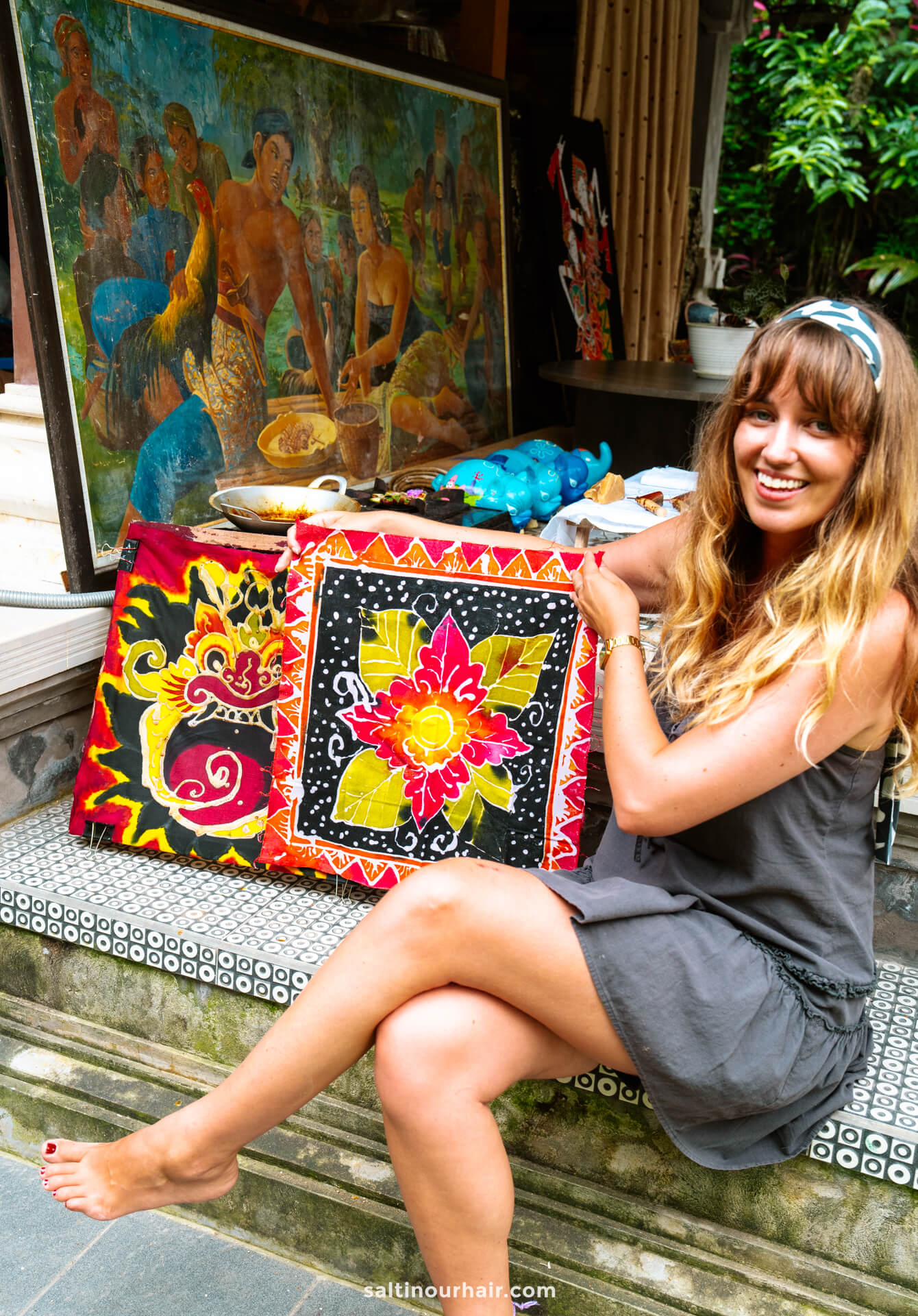
We spent around 2 to 2.5 hours working on our pieces, but next time we would book 3-4 hours. The timing of this workshop is flexible, so you can choose how long it lasts.
You can contact Yande here on WhatsApp at +62-881-363-9848 to book this directly.

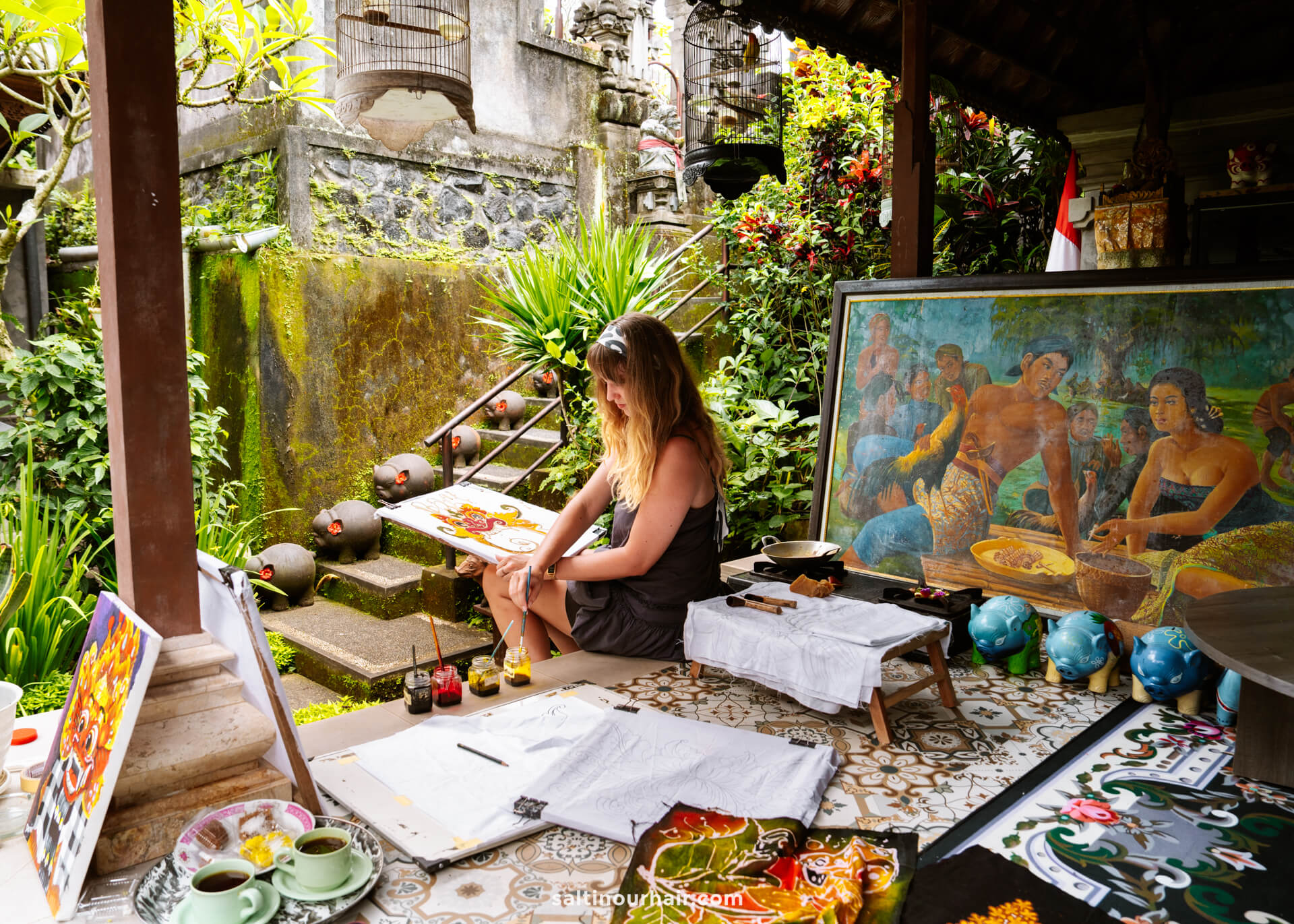
Gus, the Art Master
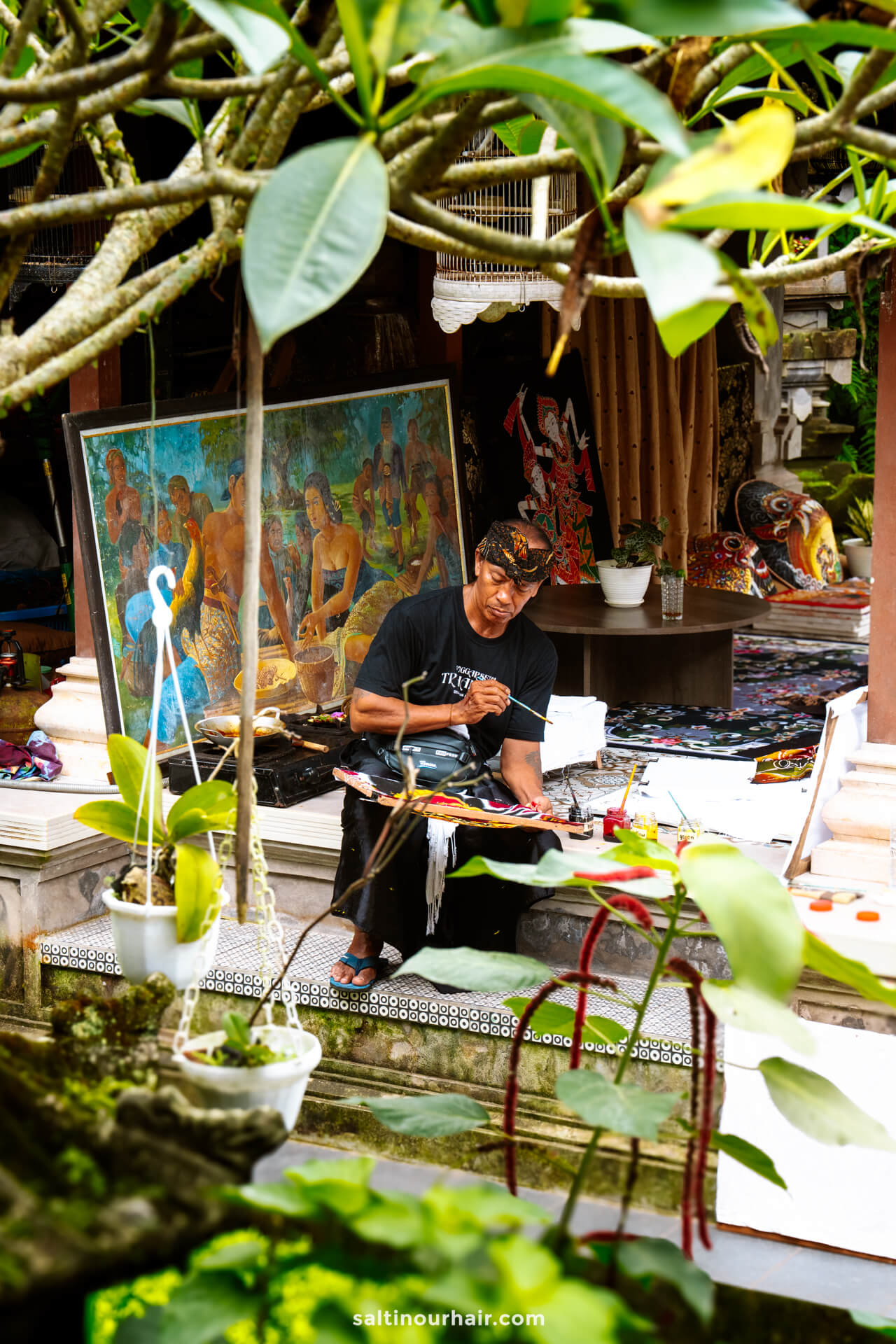
The art master (whom everyone respectfully calls Gus) has a master’s degree in art and has taught creative arts to local students for decades. You can tell immediately that this is not just a hobby; it’s his life’s work. Watching Gus demonstrate made it look effortless.
Another teacher also assisted during our workshop. He didn’t speak much English, but through gestures and demonstrations, everything was easy to understand.
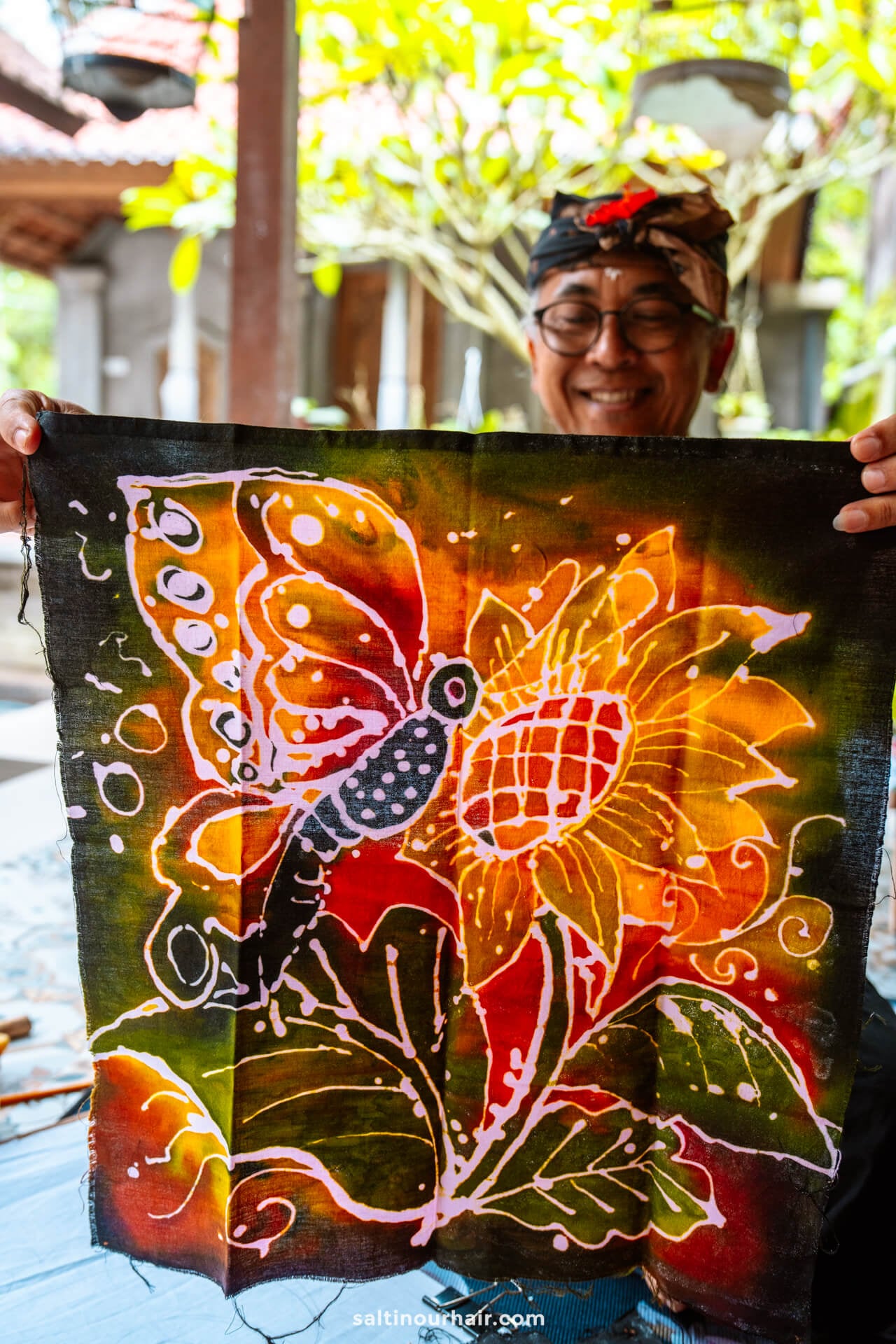
What we quickly learned about working with wax: it isn’t easy, but it’s so fun! We really loved learning this traditional technique, which has been part of Indonesian culture for generations.
- The wax has to stay hot
- Your hand needs to move steadily (my lines were sometimes too heavy, but Nick had a very steady hand – probably because he’s a photographer 😉)
- If you pause too long → it drips
- If you move too quickly → the line becomes thick
- If your hand shakes → the wax shows everything
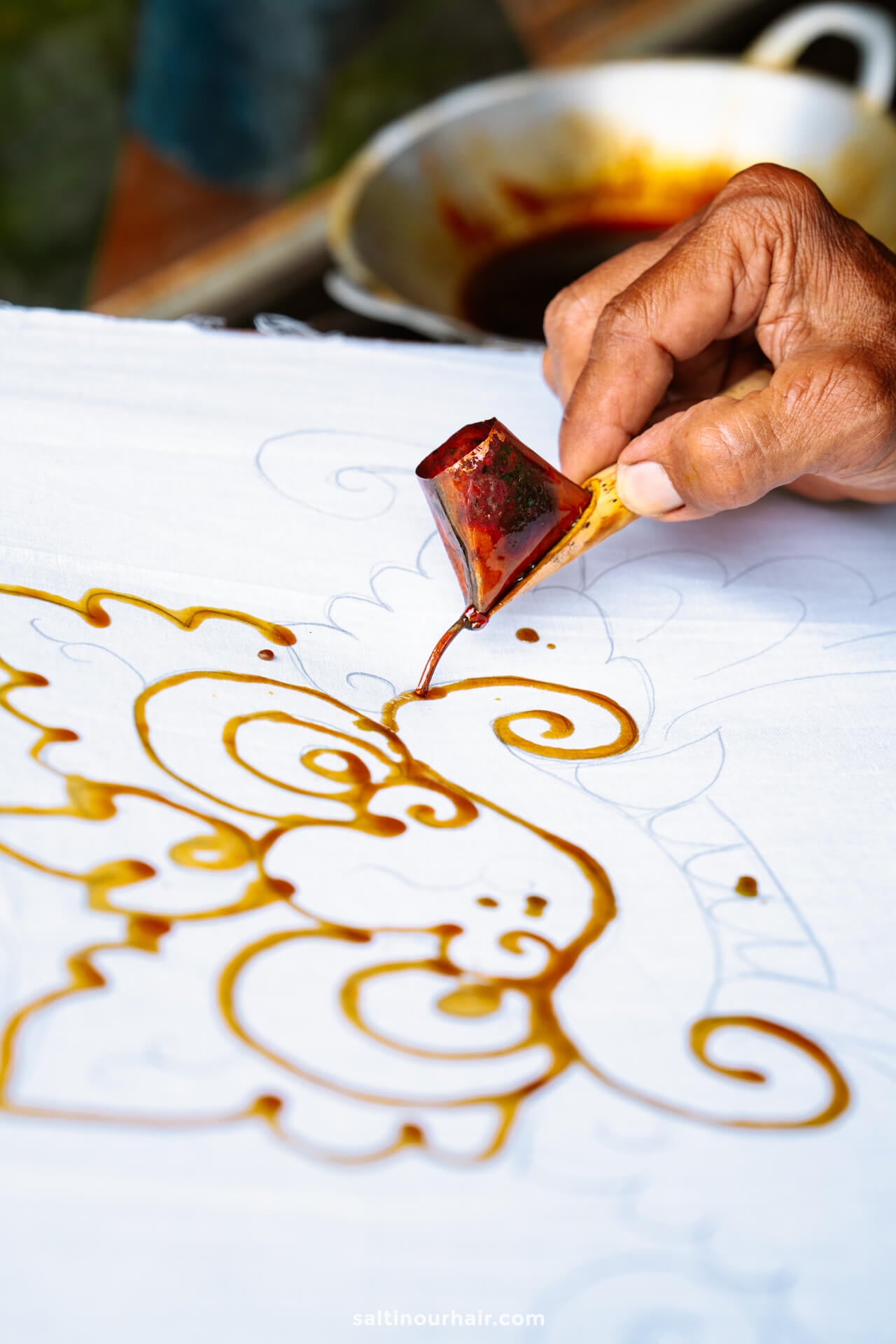
So not easy, but we got better!
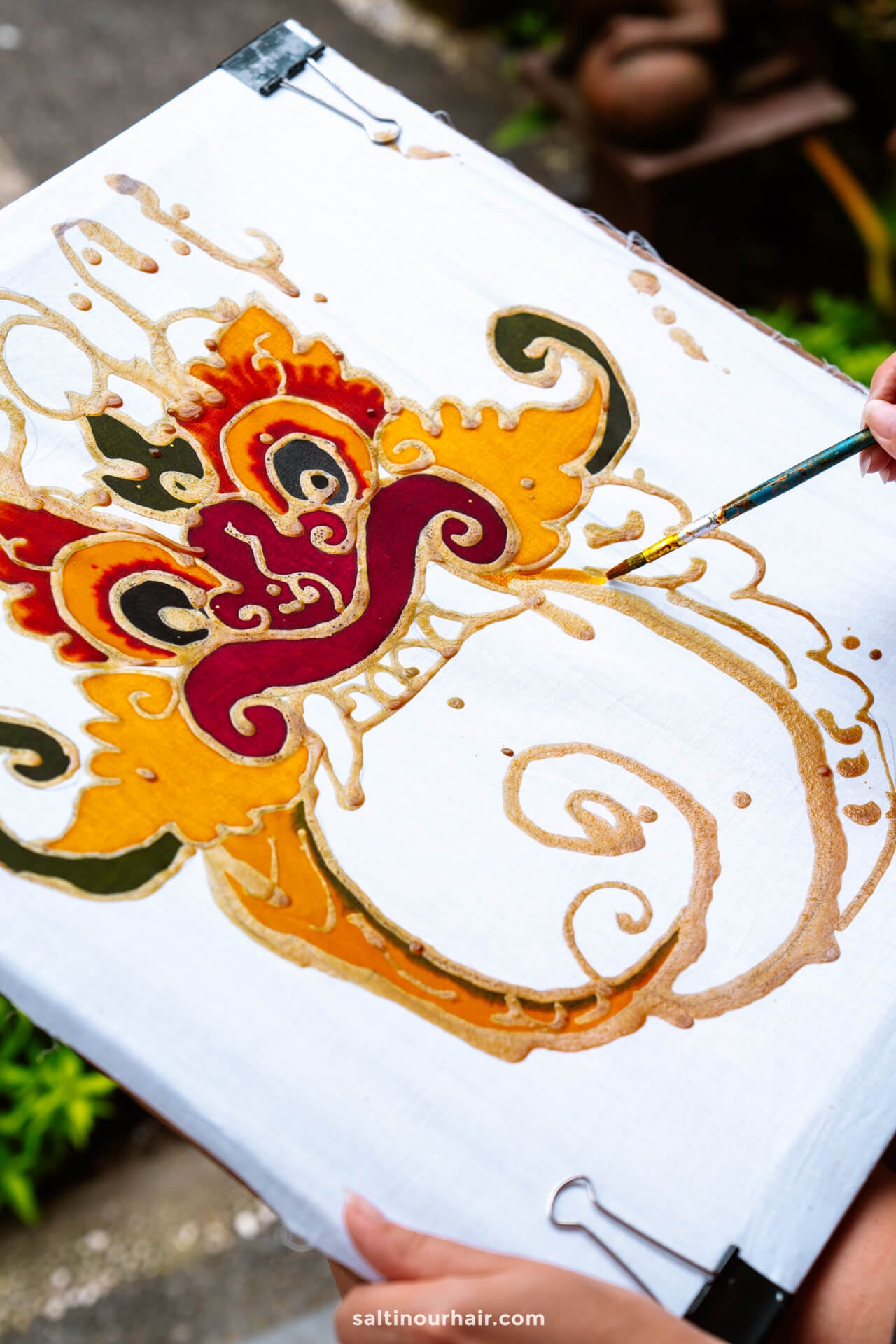
After finishing the wax lines, we moved on to painting (my favorite part!). The wax acts as a barrier, keeping the color within the shapes. It felt extremely meditative, just painting and listening to the sounds of nature in the garden.
Note: You won’t take your Bali Batik home immediately because the fabric needs to be “cooked” to remove the wax and then dried in the sun for about 24 hours.
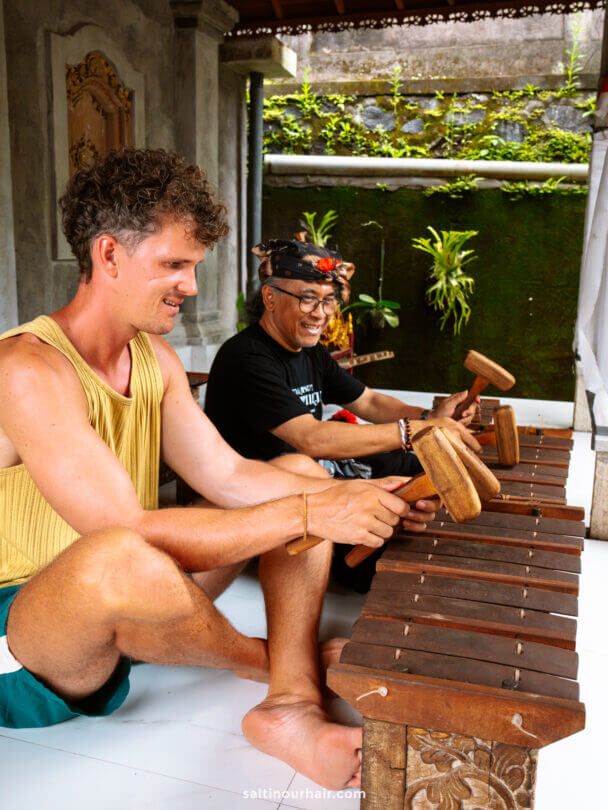
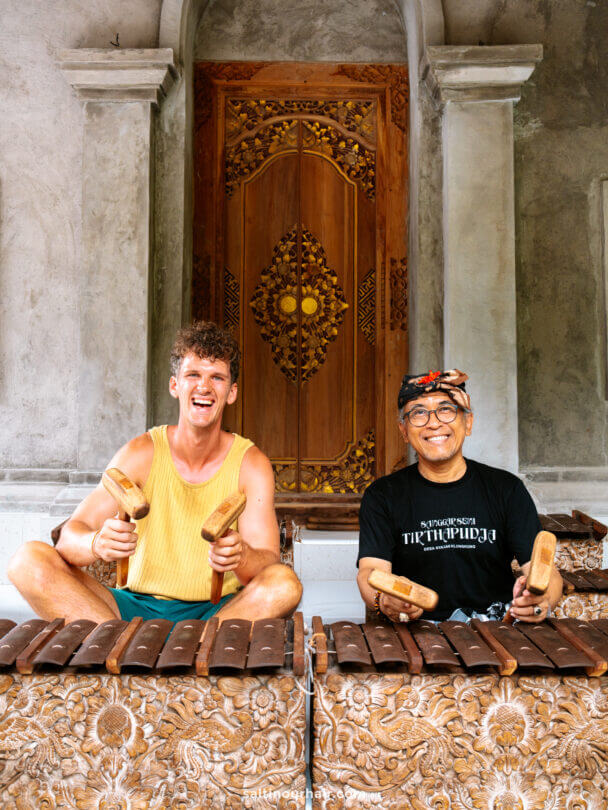
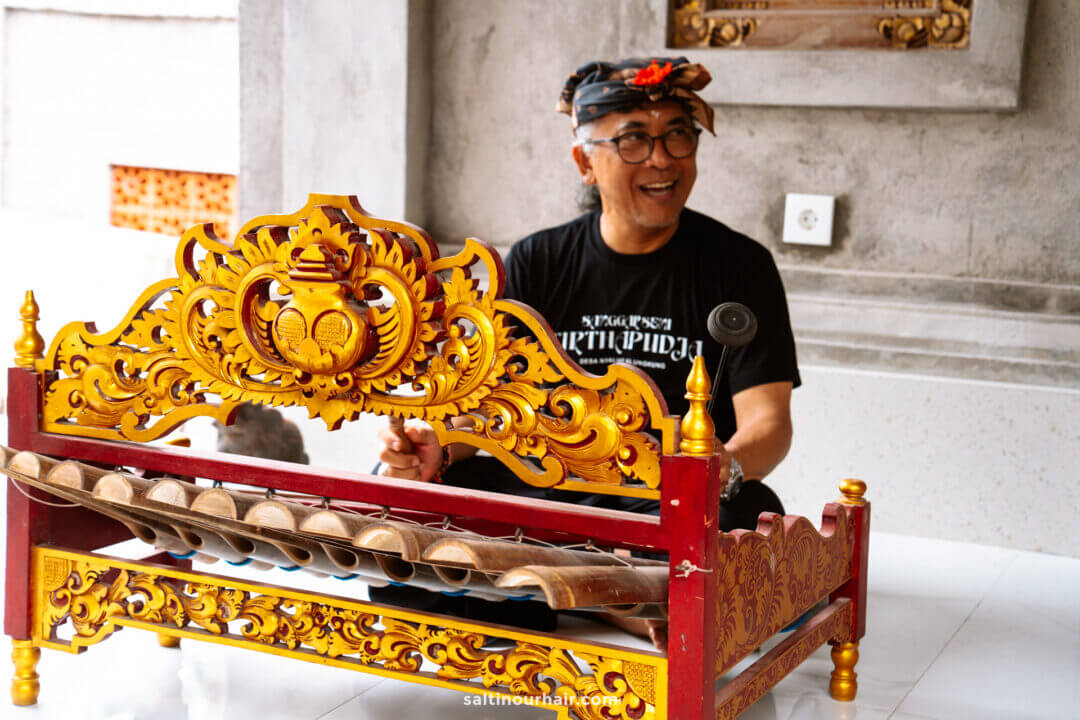
Gamelan
The traditional Balinese percussion ensemble you hear during temple ceremonies and village celebrations. The instruments vary in size, creating different tones and rhythms. A full gamelan requires at least seven players, and sometimes many more during larger ceremonies.
You can contact Yande here on WhatsApp at +62-881-363-9848 to book this tour directly with him.
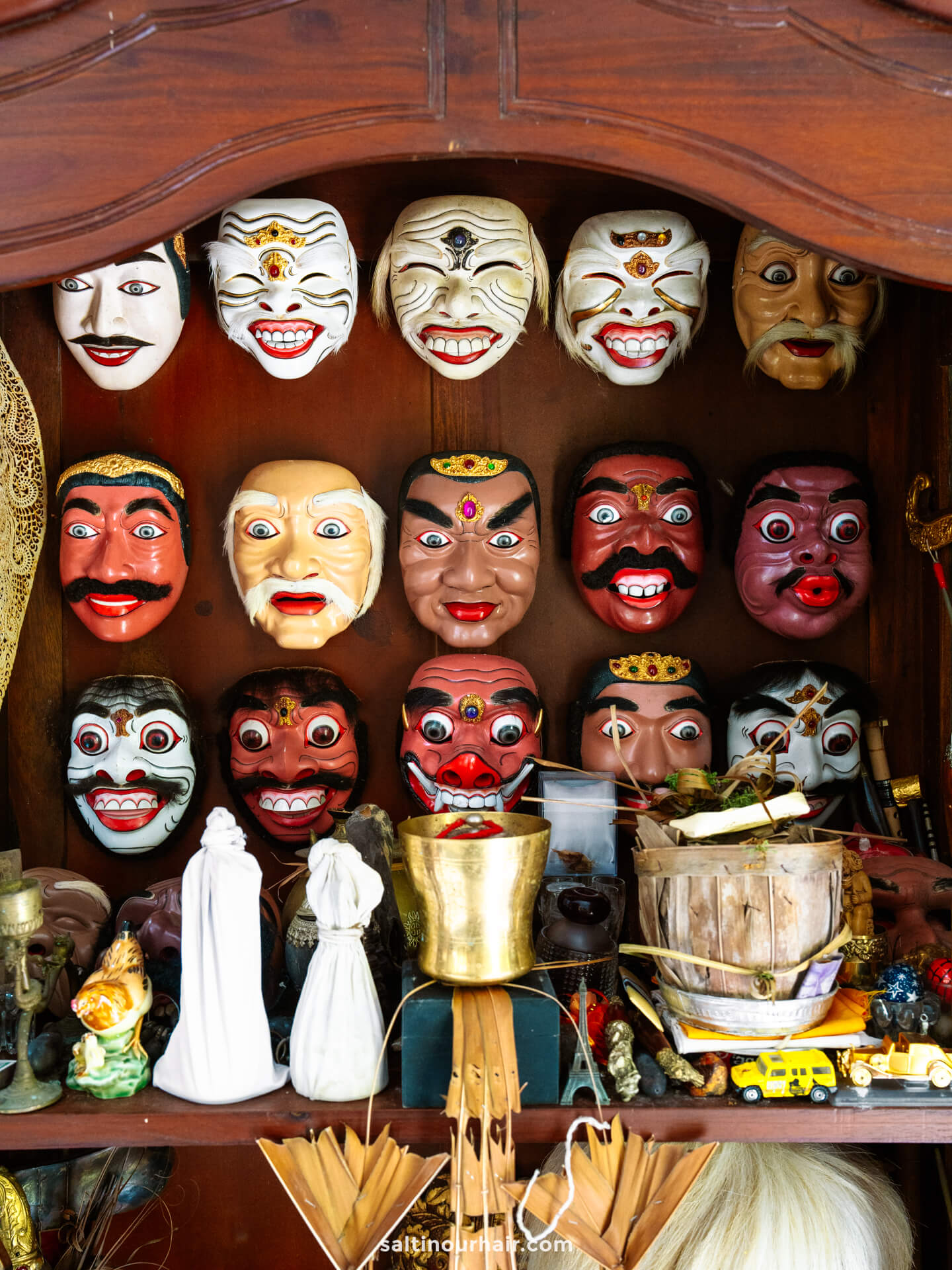
Balinese Dance & Masks
The traditional masks represent different characters: protectors, spirits, and even demons. They are often used during ceremonies like Galungan and Nyepi. Gus used beautiful masks passed down from his father. We had a short dance session, learning a few basic hand and posture movements.
How to Book this Batik Painting Workshop
Because this is a small, local experience, it’s best to arrange it directly through Yande. He knows the art master personally and can organize the timing (and optional add-ons like gamelan or dance). If you’re already planning to join his cultural village tour, this batik workshop pairs perfectly with it.
- Duration: We spent around 2 to 2.5 hours working on our pieces, but next time we would book 3-4 hours!
- Location: The workshop takes place in Klungkung Regency, about 30 minutes from Sidemen and 1 hour from Ubud.
By purchasing through our links, you support us at no additional cost.
Thank you for your support. ♥️
- Find Hotels via Booking.com
- Find a Rental Car via Rentalcars.com
- Find Flights to Bali via Skyscanner
- Get a Travel Insurance via Heymondo
- Book Tours & Attractions via GetYourGuide
- Book a Bus/Train/Transfer via 12Go


Looking for more travel information? Plan a chat with us for personalised travel advice or get an answer from the Salt in our Hair Travel Community on Facebook.